The AI Workflow Audit

Find out exactly where AI saves you the most hours.

You walk away knowing what to automate first, which tool or workflow does it, and what each one is worth — ranked, in a Map of your business that you keep. Built by hand, in your hands within five business days. Map first. Then build.

A ranked automate-this-first list The tool or workflow for each Effort vs. impact, scored A 30-day action plan
It costs nothing. Every audit is a real working call and a Map I build by hand — and the Map is yours to keep and act on, whether or not we ever work together.
The problem

You don't need another tool. You need a map.

Paying for a tenth of it

A paid AI seat, a couple of automations someone set up months ago, and a nagging feeling you're using a fraction of what you pay for.

The leak is in the back office

Retyped lead details, chased invoices, information moved between tools by hand. It feels like "just admin," so it never gets automated. It's exactly what AI does best.

The roadmap came from vendors

Every tool's onboarding says start here. Of course it does. Your real priority list can only come from how your week actually runs.

Someday never gets an afternoon

You know which tasks should run themselves. Working out which ones matter most is the afternoon you never get.

How it works

Three steps. Five business days from call to Map.

Book first, then the intake. The intake is what makes the call worth having — if you won't spend twenty minutes on it, the call won't be worth either of our time, and that's the only filter here.

Also yours the moment you book: the Level-Up Playbook, a ten-dimension self-scoring worksheet. Score yourself before we talk and you arrive already knowing your three weakest areas, so the call is spent on what to do about them.

Why me

I map systems for a living

The receipts are public at g8n.ai.

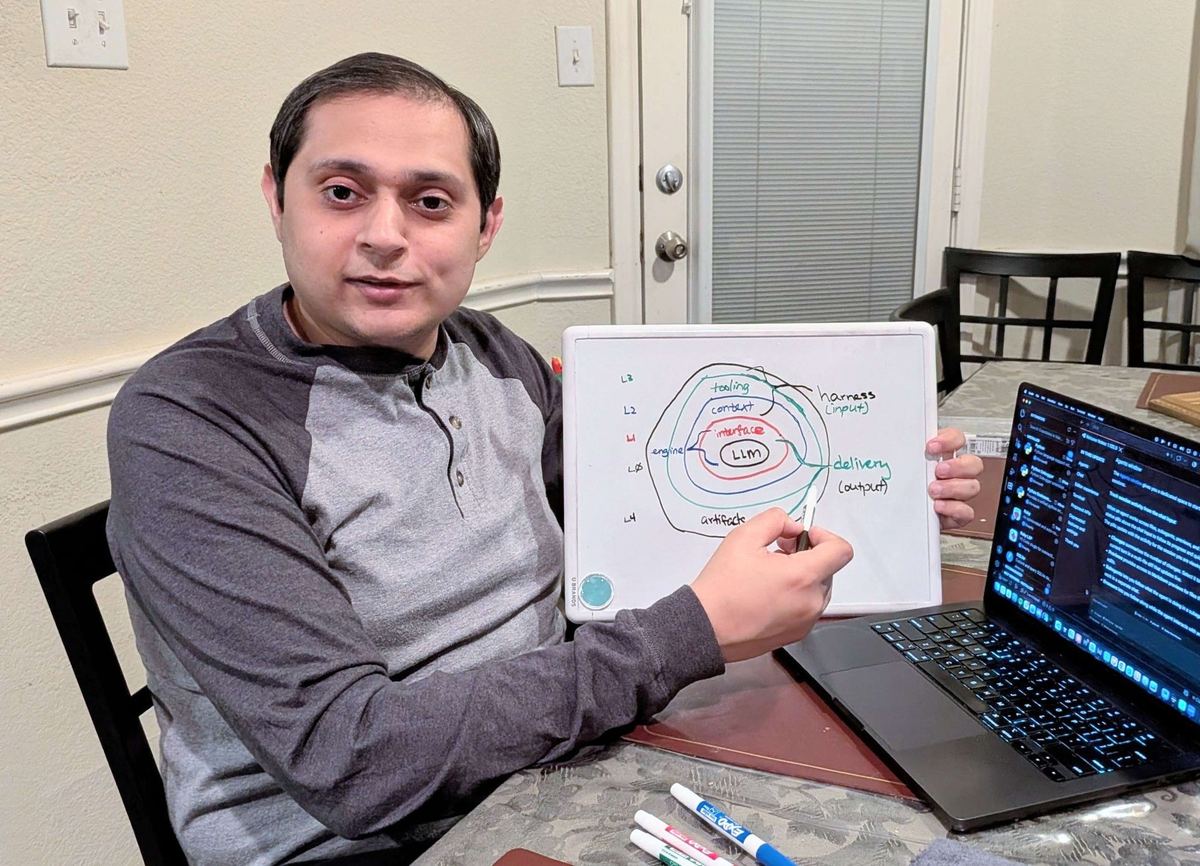
Ahad Amdani at a table holding a whiteboard, diagramming an AI system as concentric layers: an LLM at the centre, then interface, context and tooling, with harness input and delivery output labelled at the edges and artifacts at the base.
This is what the mapping actually looks like. Most of the work is working out which layer your problem really lives in — that is usually not where people expect it to be.

Three people's daily job. Now one person, with three hours to spare.

A commercial print business ran orders from their website and Amazon through three people every day: pulling order lists, cleaning them up for their commercial printer, reconciling what printed back into their tracking system. Two verification gates, dozens of formatting rules living in three heads, no SOP anywhere. They'd already bought off-the-shelf tools and a couple of "bespoke" systems that changed nothing.

The mapping came first. It took an afternoon, and the mapping is the part you're buying here. The build came after, and that's what took the work off two people's plates and gave the third back three-plus hours a day. Your audit ends at the Map. Most of the quick wins on it you can build yourself.

Who this is for

This is for you if

  • You're a solopreneur, creator, or consultant drowning in manual work
  • You run a small team and suspect half the admin could run itself
  • You want a clear plan you own, whether or not you ever hire help
  • You'd rather have a map than another year of subscriptions you half-use
Not for

This isn't for you if

  • You want a generic "AI strategy deck" for a slide library
  • You're an enterprise looking for a rollout program
What it costs

Nothing. And here's why, plainly.

Freea working call · a Map you keep

What you get:

  • Your AI Opportunity Map (PDF), within 5 business days of our call: a ranked automate-this-first list, the specific tool or workflow for each item, effort-versus-impact scores, quick wins split out from bigger builds, and a 30-day plan
  • A working session where we pressure-test it together — I read your intake beforehand, so the time goes on your opportunities, not on catching me up. Loom recording included.
  • The Level-Up Playbook, delivered when you book: a ten-dimension self-scoring worksheet that hands you your three weakest areas before we talk

I used to charge $297 for this. I stopped, because the people who most needed the map were the ones weighing up whether it was worth the money — and I would rather have the conversation. If the map points at work you want help with, I'll say so and you can decide. If it doesn't, you still keep the map.

Book my audit call
Same calendar I use for every strategy call. Takes a minute.
Booking sends you straight to the intake. Fill it in before we meet and the whole thirty minutes goes on your business.
What you leave with

A map you own, either way

You walk away with a ranked list of what to automate first in your business, the specific tool or workflow for each item, and a 30-day plan — written down, yours, and useful whether you build it yourself, hand it to someone else, or never do anything with it at all.

I can promise you'll get something out of the call because I've never once sat down with a business and found zero. Not once.

FAQ

Questions

It's free — so what's the catch?
There isn't one, but I'll be straight with you about the incentive. The 30 minutes are real work — your intake, your opportunities, live — and the Map is yours regardless. I do this free because some of the businesses I map turn out to want help building the thing, and that's where my actual work comes from. If yours is one of them I'll say so plainly at the end and you can decide. If it isn't, you still keep the Map and I've lost nothing worth counting.
Can't I just do this myself with ChatGPT?
You can, honestly. If you'll sit down and map every recurring task, research the right tool for each, score them by effort and impact, and sequence a 30-day plan, you'll get most of the way there. You're paying for the shortcut and a second set of eyes: I've done this across a dozen businesses and solo founders, and yours comes back as a ranked Map within five business days of the call, instead of the month it takes most people to get around to it.
What happens right after I book?
Booking drops you straight onto the 23-question intake, and the Level-Up Playbook arrives immediately. Fill in the intake before our call — that's the only thing I need from you. Each step hands you the next one.
Why would you give this away?
Because charging a few hundred dollars for it was the wrong trade. It filtered out people I could genuinely help, for money that doesn't move my business — and the map is worth more to me as a conversation than as a product. If the Map saves you two hours a week, that's the point. What I get is a real look at businesses like yours, and occasionally a client.
What if you don't find anything?
Then I'll tell you so on the call rather than pad a document to look busy, and you've lost half an hour. It hasn't happened yet — I've never sat down with a business and found nothing worth automating — but I'd rather say that than pretend it's impossible.
How is this different from your coaching?
The audit finds and ranks the opportunities, and most of the quick wins you can build yourself. Coaching is six weeks of building the system together, one on one. A fractional CTO engagement is six months of me owning the technical side outright. Map first, then decide whether you want a builder at all.
Do I need to prepare anything?
Just the intake, honestly answered. Rough and honest beats tidy and polished. It's questions about how your business runs, never logins or access to your tools. Come to the call as you are.

Five business days after our call, you'll know exactly what to automate first.

Free · a working call and a Map you keep.
Book my audit call →
Book my audit call